
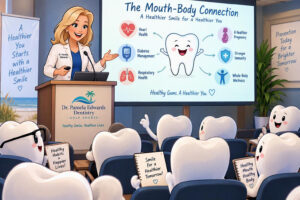
The Mouth-Body Connection: How Oral Health Affects Your Entire Body
When most people think about oral health, they focus on having clean teeth, fresh breath, and a beautiful smile. While those are certainly important benefits, modern research continues to reveal something even more significant: your oral health is closely connected to your overall health.
This relationship, known as the oral-systemic health connection, highlights how conditions in the mouth may influence health throughout the body. The mouth is not an isolated part of the body. It is connected to your cardiovascular system, respiratory system, immune system, and digestive system. In fact, signs of certain health conditions often appear in the mouth before symptoms develop elsewhere.
At Dr. Pamela Edwards Dentistry in Gulf Shores, we believe patient education is one of the most important tools for maintaining lifelong health. Understanding how oral health and overall wellness work together can help you make informed decisions that benefit your entire body.
Understanding Oral-Systemic Health
The human mouth naturally contains hundreds of different types of bacteria. Most are harmless when controlled through regular brushing, flossing, and professional dental care. However, when harmful bacteria are allowed to accumulate along the gumline and between teeth, they can lead to inflammation, infection, and periodontal (gum) disease.
As gum disease progresses, bacteria and inflammatory compounds can enter the bloodstream. Once these substances circulate throughout the body, they may contribute to or worsen existing health conditions. Researchers continue to study these connections, uncovering evidence that oral health plays a larger role in overall wellness than previously understood.
According to the Centers for Disease Control and Prevention (CDC), untreated gum disease remains one of the most common chronic inflammatory conditions among adults.
Trusted Source: https://www.cdc.gov/oral-health/about/index.html
Oral Health and Heart Disease
One of the most widely researched oral-systemic relationships involves cardiovascular health.
Scientists have spent decades investigating the association between periodontal disease and heart disease. While gum disease does not directly cause heart disease, studies suggest that chronic inflammation associated with periodontal disease may contribute to cardiovascular complications.
When gums become infected, the body’s immune system responds with inflammation. Chronic inflammation is a known risk factor for cardiovascular disease and may contribute to conditions such as:
- Coronary artery disease
- Narrowing of blood vessels
- Increased risk of heart attack
- Stroke-related complications
Researchers have also found oral bacteria in arterial plaque, leading to continued investigation into how oral infections may impact heart health.
People with heart disease or other cardiovascular risk factors should be especially diligent about maintaining healthy gums and attending routine dental appointments.
The American Heart Association recognizes a relationship between oral health and cardiovascular wellness and continues to support ongoing research in this area.
Trusted Source: https://www.heart.org/en/health-topics/consumer-healthcare/what-is-cardiovascular-disease/oral-health-and-heart-disease
Diabetes and Gum Disease: A Two-Way Relationship
Few oral-systemic relationships are as well documented as the connection between diabetes and periodontal disease.
Individuals with diabetes often have higher blood glucose levels, which can increase susceptibility to infections throughout the body, including the gums. As a result, patients with diabetes are more likely to develop gum disease and may experience more severe symptoms.
What makes this relationship unique is that it works both ways.
Advanced gum disease can make it more difficult for the body to regulate blood sugar levels. The chronic inflammation caused by periodontal disease may affect insulin function, creating additional challenges for diabetic patients.
This cycle can become difficult to break without proper oral healthcare.
Patients with diabetes should pay close attention to symptoms such as:
- Bleeding gums
- Gum tenderness
- Persistent bad breath
- Receding gums
- Loose teeth
- Increased tooth sensitivity
Routine cleanings and periodontal evaluations are an important part of diabetes management and may help support better overall health outcomes.
The American Diabetes Association recommends maintaining good oral hygiene and regular dental visits as part of comprehensive diabetes care.
Trusted Source: https://diabetes.org/health-wellness/oral-health
The Connection Between Oral Health and Pregnancy
Pregnancy is an exciting time filled with many physical changes, including changes that affect oral health.
Hormonal fluctuations during pregnancy can increase blood flow to gum tissues, making gums more susceptible to irritation, swelling, and inflammation. Many women experience a condition known as pregnancy gingivitis, which can cause:
- Red or swollen gums
- Increased gum sensitivity
- Bleeding during brushing or flossing
- Heightened inflammation
Researchers have also explored possible associations between severe periodontal disease and pregnancy complications. While studies continue, experts consistently recommend maintaining excellent oral health throughout pregnancy.
Contrary to common myths, routine dental cleanings, examinations, and many dental treatments are considered safe during pregnancy.
Expectant mothers should not delay preventive care. Maintaining good oral health helps support maternal wellness and provides a healthier environment for both mother and baby.
The American Dental Association (ADA) encourages routine dental care during pregnancy.
Trusted Source: https://www.ada.org/resources/research/science-and-research-institute/oral-health-topics/pregnancy
Oral Health and Respiratory Conditions
Your oral health may even influence your respiratory system.
When harmful bacteria accumulate in the mouth, they can potentially be inhaled into the lungs, particularly in older adults, individuals with weakened immune systems, and those with chronic health conditions.
Researchers have investigated possible connections between poor oral hygiene and respiratory illnesses because bacteria from the mouth may travel into the respiratory tract. This can become more concerning for individuals living in assisted-care settings or those who have difficulty maintaining daily oral hygiene routines.
Maintaining healthy teeth and gums helps reduce bacterial buildup and supports overall health.
While brushing and flossing are often viewed as dental hygiene habits, they may also play a role in promoting respiratory wellness.
The National Institute of Dental and Craniofacial Research continues to study the relationship between oral health and systemic conditions.
Trusted Source: https://www.nidcr.nih.gov/health-info
Inflammation: The Common Factor Behind Many Health Conditions
One theme appears repeatedly throughout oral-systemic health research: inflammation.
Inflammation is the body’s natural response to injury, infection, or irritation. In small amounts and for short periods, inflammation helps the body heal. However, chronic inflammation can create long-term health concerns.
Periodontal disease is fundamentally an inflammatory condition.
When gum disease goes untreated, the body remains in a constant state of low-level inflammation. Over time, this ongoing inflammatory burden may contribute to broader health concerns and place additional stress on the body’s systems.
Because inflammation is linked to many chronic diseases, maintaining healthy gums is more important than ever.
This is one reason dentists emphasize preventive care and early intervention. Identifying gum disease in its early stages may help prevent more serious complications later.
Your Dentist May Be the First to Notice Health Problems
Many patients are surprised to learn that dental visits can sometimes reveal health concerns unrelated to teeth.
During routine examinations, dentists may observe signs that could indicate underlying medical conditions, such as:
- Uncontrolled diabetes
- Nutritional deficiencies
- Autoimmune disorders
- Acid reflux
- Certain infections
- Sleep-related breathing issues
Because many patients see their dentist more regularly than their primary care physician, dental examinations can serve as an important early-warning system.
Regular checkups allow dental professionals to identify abnormalities, monitor changes, and recommend appropriate follow-up care when necessary.
How to Protect Your Oral and Overall Health
The good news is that many oral health conditions are preventable. Small daily habits can have a lasting impact on your smile and overall wellness.
Healthy Habits That Benefit Your Entire Body
Brush thoroughly twice each day.
Use fluoride toothpaste and brush for at least two minutes to remove plaque and bacteria.
Floss every day.
Flossing removes debris and bacteria from areas your toothbrush cannot reach.
Maintain a balanced diet.
Limiting sugary foods and beverages helps reduce cavity-causing bacteria while supporting overall health.
Drink plenty of water.
Staying hydrated helps wash away food particles and supports healthy saliva production.
Avoid tobacco products.
Smoking and tobacco use significantly increase the risk of gum disease, oral cancer, and numerous systemic health conditions.
Visit your dentist regularly.
Professional cleanings and examinations help identify concerns before they become more serious.
Address gum disease early.
Early treatment is often simpler, more effective, and less invasive than treating advanced periodontal disease.
Why Preventive Dentistry Is More Important Than Ever
Preventive dentistry is no longer just about avoiding cavities.
Today, preventive dental care plays an important role in supporting whole-body wellness. By monitoring gum health, detecting disease early, and reducing inflammation, routine dental visits contribute to a healthier future.
Professional cleanings remove plaque and tartar that cannot be eliminated through brushing alone. Regular examinations allow your dental team to identify early signs of gum disease, tooth decay, oral cancer, and other concerns before they progress.
Investing in preventive dental care today can help protect your smile and support your long-term health for years to come.
Schedule Your Visit with Dr. Pamela Edwards Dentistry in Gulf Shores
Your mouth is one of the most important gateways to your overall health. Healthy gums and teeth do more than create a confident smile. They may contribute to better cardiovascular health, improved diabetes management, reduced inflammation, and enhanced overall wellness.
At Dr. Pamela Edwards Dentistry in Gulf Shores, we are committed to helping patients protect both their oral health and their overall health through comprehensive preventive dentistry and personalized care.
Whether you are due for a routine cleaning, concerned about gum health, or simply want to take a proactive approach to your wellness, our experienced team is here to help.
Call Dr. Pamela Edwards Dentistry in Gulf Shores today to schedule your appointment and discover how a healthier smile can support a healthier life.
Sources
- https://www.cdc.gov/oral-health/about/index.html
- https://www.heart.org/en/health-topics/consumer-healthcare/what-is-cardiovascular-disease/oral-health-and-heart-disease
- https://diabetes.org/health-wellness/oral-health
- https://www.ada.org/resources/research/science-and-research-institute/oral-health-topics/pregnancy
- https://www.nidcr.nih.gov/health-info
Dr. Pamela O. Edwards Dentistry
P.O. Box 3849,
Fax: Dr. Pamela O Edwards Family Dentistry
Email: mrstoothdoc@gmail.com
| Monday | 7:00 AM - 8:00 PM |
| Tuesday | 7:00 AM - 8:00 PM |
| Wednesday | 7:00 AM - 8:00 PM |
| Thursday | 7:00 AM - 8:00 PM |
| Friday | 7:00 AM - 8:00 PM |
| Saturday | 9:00 AM - 12:30 PM |
| Sunday | 9:30 AM - 12:30 PM |