
Endodontics in Dentistry: History, Evolution, and Today’s Life‑Saving Treatments
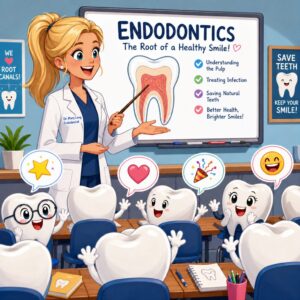
What Is Endodontics?
Endodontics is the dental specialty dedicated to diagnosing, treating, and preventing diseases of the tooth’s inner structures — including the pulp, nerves, and root canals. The pulp is the living tissue inside each tooth, responsible for sensation, nourishment, and early tooth development. When decay, trauma, cracks, or infection reach this sensitive area, endodontic treatment becomes essential.
Rather than removing the tooth, endodontics focuses on preserving natural teeth by removing infection, relieving pain, and restoring function. This makes it one of the most important branches of modern dentistry, especially for patients experiencing severe toothaches or dental abscesses.
A Brief History of Endodontics
Endodontics has one of the most fascinating histories in dentistry — stretching from ancient attempts to relieve tooth pain to today’s highly precise, technology‑driven treatments. What began as rudimentary pain management has evolved into a specialized field focused on saving natural teeth through science, sterilization, and advanced imaging.
Ancient Civilizations: Early Attempts at Pain Relief
Archaeological evidence shows that humans have attempted to treat infected teeth for more than 2,000 years. A skull discovered in the Negev Desert contained a tooth with a 2.5 mm bronze wire inserted into the root canal, likely used by Romans to drain infection and relieve pain. Other ancient cultures attempted cauterization — burning the pulp with heated metal tools — as a way to stop severe toothaches. Early Greek and Roman physicians, including Hippocrates and Archigenes, recommended heating instruments to destroy the nerve, though they did not yet understand the anatomy of the pulp.
These early treatments were crude, painful, and based largely on superstition rather than science.
Early Medical Theories: The “Tooth‑Worm” Era
For centuries, dental pain was believed to be caused by a “tooth worm” living inside the tooth. This theory persisted from Babylonian times through the Renaissance. Treatments included applying honey to lure the worm out or inhaling fumes from heated henbane seeds, which had narcotic properties that temporarily relieved pain. Although incorrect, the tooth‑worm theory shaped early dental practices and delayed scientific understanding of pulp disease.
Middle Ages to Renaissance: Cauterization and Early Descriptions of the Pulp
Persian and Arabic medical texts from the 7th–8th centuries contain the first formal descriptions of pulp cauterization, recommending hot needles or chemical agents to destroy the nerve. These techniques spread to Europe by the 16th century. In 1543, anatomist Andreas Vesalius published one of the earliest anatomical descriptions of the dental pulp, marking a turning point toward scientific understanding of tooth structure.
18th Century: The Birth of Modern Dentistry
The 1700s brought major advancements thanks to Pierre Fauchard, often called the “Father of Modern Dentistry.” Fauchard described early pulp‑removal techniques and introduced prosthetic innovations such as anchoring replacement teeth using dowel pins placed into the root canal. Although infection control was still poorly understood, this era marked the beginning of intentional treatment “within the tooth.”
19th Century: Early Instruments, Chemical Devitalization & Electrical Innovation
The 1800s saw rapid progress in tools and techniques:
- 1824: Edward Hudson became the first to fill a root canal with gold foil.
- 1830s–1850s: Dentists used arsenic compounds to devitalize the pulp chemically — a dangerous but common method at the time.
- 1840s–1850s: Innovators like Carl Philip Steinhel and Moriz Heider introduced electrical cauterization, using heated platinum wires or galvanic current to destroy the nerve.
- Late 1800s: More efficient hand files were developed, including designs by Charles Maïsse, improving the ability to clean root canals.
These developments laid the foundation for modern root canal instrumentation.
Early 20th Century: Scientific Breakthroughs & the Rise of Endodontics as a Specialty
The early 1900s transformed endodontics from guesswork into a predictable science:
- X‑rays allowed dentists to see inside the tooth for the first time.
- Local anesthesia made treatment significantly more comfortable.
- Sterilization protocols reduced infection and improved outcomes.
In 1928, Dr. Harry B. Johnston coined the term “endodontics” and became the first dentist to limit his practice exclusively to the specialty.
This era marked the beginning of formal endodontic training and professional standards.
Mid–Late 20th Century: Irrigation, Disinfection & Rotary Innovation
As dentistry embraced microbiology, the importance of disinfecting the root canal became clear. Key advancements included:
- Sodium hypochlorite and EDTA as antibacterial irrigants
- Ultrasonic and laser activation of irrigants
- Nickel‑titanium rotary instruments, which allowed safer cleaning of curved canals and revolutionized treatment efficiency
These innovations dramatically increased success rates and reduced complications.
Modern Era: Digital Imaging, Microscopes & Biocompatible Materials
Today’s endodontics is defined by precision and technology:
- Cone‑beam CT scans provide 3D views of tooth anatomy.
- Dental microscopes allow clinicians to locate tiny canals invisible to the naked eye.
- Thermoplastic gutta‑percha and advanced sealers create long‑lasting, bacteria‑resistant seals.
Modern endodontics is safer, faster, and more predictable than ever — transforming what was once a painful, last‑resort procedure into a comfortable, tooth‑saving treatment backed by science.
How Endodontics Has Evolved
Modern endodontics blends advanced technology with refined clinical techniques to deliver predictable, comfortable, and long‑lasting results.
1. Advanced Imaging
Digital X‑rays and 3D cone‑beam CT scans provide detailed views of the tooth’s internal anatomy. Dentists can identify hidden canals, fractures, infections, and bone changes with remarkable accuracy — improving diagnosis and treatment outcomes.
2. Microscopic Precision
Dental operating microscopes allow clinicians to work at magnifications up to 25x. This helps locate tiny accessory canals, remove infected tissue thoroughly, and seal the tooth with exceptional precision.
3. Rotary Endodontic Tools
Rotary instruments made from flexible nickel‑titanium allow smoother, faster cleaning of root canals. They reduce treatment time, improve comfort, and enhance the consistency of results.
4. Biocompatible Materials
Modern materials like gutta‑percha, resin‑based sealers, and advanced bonding agents help protect the tooth long‑term. These materials resist bacteria, support healing, and maintain the tooth’s structural integrity.
5. Improved Pain Management
Today’s endodontic treatments are designed to be comfortable. Local anesthesia, minimally invasive techniques, and modern instruments make root canal therapy far less intimidating than its outdated reputation suggests.
Today’s Most Common Endodontic Treatments
Root Canal Therapy
Root canal therapy removes infected pulp, disinfects the canals, and seals the tooth to prevent reinfection. Modern root canals are typically no more uncomfortable than getting a filling — and they often provide immediate relief from severe pain.
Endodontic Retreatment
If a previously treated tooth becomes reinfected, retreatment can restore health and function. This may involve reopening the tooth, removing old materials, and cleaning the canals more thoroughly.
Apicoectomy (Root‑End Surgery)
When infection persists at the tip of the root, an apicoectomy removes the affected tissue and seals the root end. This minor surgical procedure can save a tooth that might otherwise be lost.
Pulp Capping & Pulp Therapy
When decay is close to the nerve, pulp‑preserving treatments help maintain vitality. These procedures are especially common in younger patients whose teeth are still developing.
Emergency Endodontic Care
Severe toothaches, abscesses, swelling, and dental trauma often require immediate endodontic attention. Quick treatment relieves pain, prevents the spread of infection, and protects the natural tooth.
Benefits of Modern Endodontic Care
- Pain Relief: Endodontics eliminates the source of tooth pain quickly and effectively.
- Tooth Preservation: Saving natural teeth helps maintain proper chewing, alignment, and jawbone health.
- Improved Oral Health: Removing infection prevents it from spreading to other teeth or tissues.
- Cost‑Effective: Preserving a natural tooth is often more affordable long‑term than extraction and replacement.
- Fast Recovery: Modern techniques minimize discomfort and speed up healing.
- Long‑Term Success: With proper care, teeth treated with root canals can last a lifetime.
Endodontics at Dr. Pamela O. Edwards Family Dentistry in Gulf Shores, Alabama
At Dr. Pamela O. Edwards Family Dentistry, patients benefit from a compassionate, family‑centered approach to dental care. The practice blends decades of experience with modern technology to ensure comfortable, effective treatment — including endodontic services designed to relieve pain and protect natural teeth.
As a trusted women‑owned, mother‑daughter practice, Dr. Pamela Edwards and Dr. Mary Long prioritize gentle care, clear communication, and a welcoming environment that feels like home. Their approach focuses on:
- Listening closely to patient concerns
- Providing clear explanations and treatment options
- Using modern tools for comfortable, efficient care
- Supporting long‑term oral health and confidence
Whether you’re dealing with a sudden toothache or need long‑term restorative care, their team is committed to helping you smile with comfort and confidence.
Final Thoughts
Endodontics has come a long way from its ancient origins. Today, it stands as one of the most effective ways to relieve dental pain and preserve natural teeth. With advanced tools, modern techniques, and patient‑focused care, endodontic treatment is safer, faster, and more comfortable than ever.
If you’re experiencing tooth pain or suspect an infection, early treatment is essential. Addressing the problem quickly can save your tooth, protect your overall health, and restore your comfort.
Dr. Pamela O. Edwards Dentistry
P.O. Box 3849,
Fax: Dr. Pamela O Edwards Family Dentistry
Email: mrstoothdoc@gmail.com
| Monday | 7:00 AM - 8:00 PM |
| Tuesday | 7:00 AM - 8:00 PM |
| Wednesday | 7:00 AM - 8:00 PM |
| Thursday | 7:00 AM - 8:00 PM |
| Friday | 7:00 AM - 8:00 PM |
| Saturday | 9:00 AM - 12:30 PM |
| Sunday | 9:30 AM - 12:30 PM |